The Waitlist Is the New Aunty Approval: Inside the Desi Streetwear Drop Economy
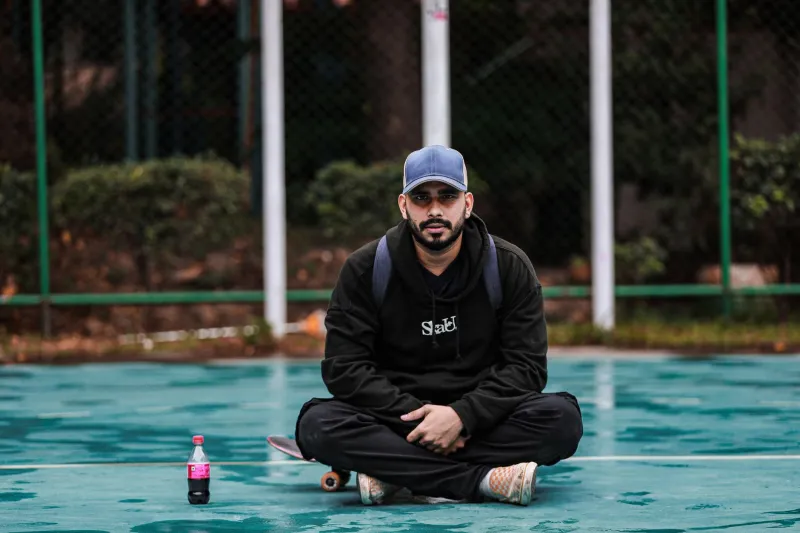
Walk through a college campus in 2026 and you'll see it. Not a graphic tee that says 'Desi' in a font that looks like a wedding invitation. Something sharper. A hoodie with Urdu script that your aunt can read but your roommate can't. A cap with a Punjabi slogan that sounds like a threat and a compliment. A crewneck with a map of a temple town your parents left in the '90s.
South Asian streetwear is having a moment. Not the kind of moment where a fast-fashion brand slaps a mandala on a crop top and calls it global. The kind where young designers are building labels with actual point of view—and waitlists. US Gen Z is setting alarms for drops like they're concert tickets. In group chats, people are trading screenshots of sold-out hoodies the way their parents trade property listings.
The appeal is simple: specificity. For years, 'desi merch' meant a generic T-shirt with a paisley print or a slogan that could have been written by a brand consultant who once ate at a dosa place. Now, designers are making clothes that feel like inside jokes. A hoodie that says 'NRI' in Devanagari. A tee that references a specific regional slang word. A jacket with a graphic of a temple town's bus stand. It's not just representation. It's recognition.
From Generic 'Desi' Merch to Specific Storytelling
'The first thing I tell young designers is: don't make a shirt for all desis. Make a shirt for your desis,' says Priya Raman, a Chicago-based designer who runs the label Zari & Concrete. 'The moment you try to speak to everyone, you speak to no one. The specificity is the cool part.'
Raman's label makes limited runs of hoodies with embroidered Urdu couplets and tees with Punjabi phrases that her grandmother used to yell. 'My mom cried when she saw the first sample,' she says. 'Then she asked why it was $80. Then she bought two.'
That tension—between family approval and streetwear pricing—is everywhere in this space. These labels aren't cheap. Hoodies run $70 to $120. Tees are $40 to $60. Caps are $35. But the customers aren't just buying fabric. They're buying a version of themselves that feels more honest than the 'model minority' merch of the past.
The Drop Model Is the New Hustle
Most of these brands operate on a drop model: limited quantities, announced on Instagram, sold direct-to-consumer, gone in hours. It's a strategy borrowed from streetwear giants, but it works differently here. For a diaspora audience, scarcity isn't just hype. It's a way to keep the designs personal. A hoodie with a specific regional phrase doesn't need to be mass-produced. It needs to find the 300 people who will text their cousin a photo and say 'this is us.'
Organizers of a recent South Asian streetwear pop-up in Edison say the line started forming an hour before doors. 'We had kids driving from Connecticut,' says one organizer. 'One guy brought his mom. She bought a tote bag with a saying she used to use. It was very cute and very chaotic.'
The drop model also lets designers stay small and independent. No big investors, no licensing deals with fast-fashion companies that would strip the meaning out of the designs. 'I don't want to see my design on a Shein knockoff in three weeks,' Raman says. 'That's not why I started.'
The Labels Making Gen Z Set Alarms
Here's a short, non-exhaustive list of the archetypes you'll see in this scene. (Names are the labels; the waitlists are real.)
Kala Kendra Studio: Brooklyn-based, known for hoodies with hand-drawn Urdu script and a tagline that translates to 'you are not late.' The last drop sold out in 11 minutes.
Puttar Worldwide: LA-based, unapologetically Punjabi. Tees with slogans that sound like aunty threats, plus a cult-favorite crewneck with a truck-art-inspired graphic. They restock maybe twice a year.
Nukkad Goods: Bay Area label making clothes for the 'chai after work' crowd. Think zip-ups with tiny maps of specific neighborhoods in Hyderabad and Pune. Very 'my parents' house is on this street' energy.
Chappal Club: Houston-based, all about the most iconic South Asian footwear. Socks, caps, and a hoodie that says 'One chappal away from a beating.' The brand is funny on purpose, and the comments section is a family group chat.
Zari & Concrete: Chicago label mixing embroidery with workwear silhouettes. Their ongoing series of 'aunty-approved' jackets has a waitlist longer than a wedding RSVP list.
The Balance: Specific Enough to Matter, Cool Enough to Wear
The tricky part is scaling. A hoodie with a hyper-specific Punjabi phrase is cool if you know the phrase. If you don't, it might just look like a nice font. Designers say that's fine. The goal isn't to explain every joke to every customer. The goal is to make clothes that feel like they belong to someone. And if that someone is a 19-year-old in Dallas who has never been to a temple but knows exactly what her mom means when she says 'log kya kahenge,' even better.
'We're not trying to be for everyone,' says Raman. 'We're trying to be for the kid who used to feel weird about bringing their mom's food to lunch. Now they're wearing a shirt that says the thing their mom says. That's a full-circle moment.'
The mainstream fashion world is starting to notice. But the best labels aren't waiting for permission. They're building their own distribution, their own hype, their own rules. The waitlist is the new aunty approval. And honestly, it's about time the aunties got some competition.